

At Silicon Valley Certification Hub (SVCH), we’re passionate about connecting business leaders with cutting-edge research that helps them understand and apply artificial intelligence in the real world.
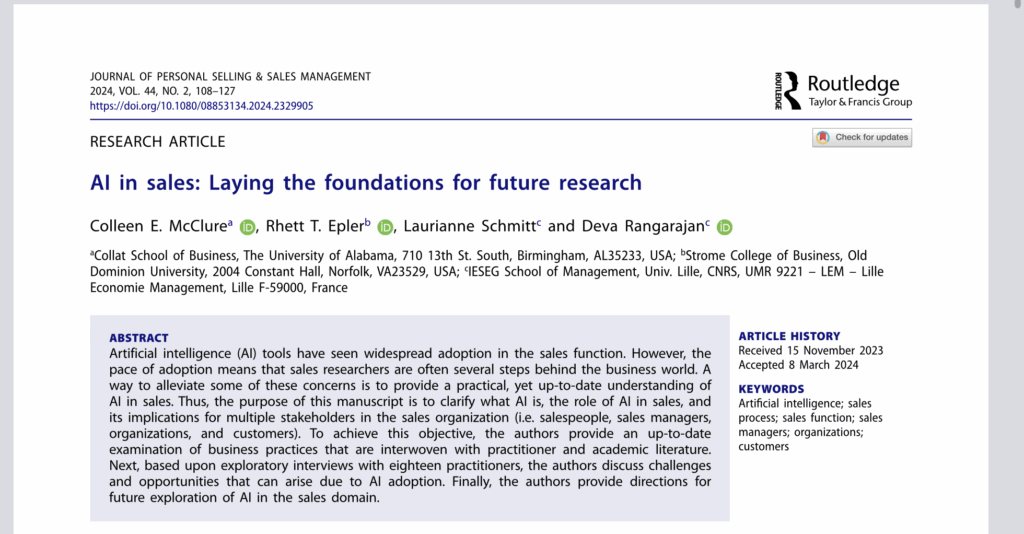
This week, we’re featuring a new study published in the Journal of Personal Selling & Sales Management titled “AI in Sales: Laying the Foundations for Future Research.”
It was written by four researchers who have been studying how digital tools and automation are reshaping how teams sell, build trust, and make decisions:
- Dr. Colleen McClure – University of Alabama at Birmingham
- Dr. Rhett Epler – Old Dominion University
- Dr. Laurianne Schmitt – IESEG School of Management (France)
- Dr. Deva Rangarajan – IESEG School of Management (France)
We’re hosting Colleen & Rhett in a live SVCH webinar on Wednesday, October 29th at 10 AM Pacific Time, where we’ll dive deeper into their findings and discuss how AI is redefining the sales profession.
Why This Paper Matters
Almost every company is talking about AI in sales, from automating outreach emails to predicting which customers are ready to buy. But, as the authors point out, academic research hasn’t kept up with how fast technology is moving. They set out to answer a basic but important question: What does “AI in sales” really mean?
Their goal is to build a clear foundation for understanding how AI is affecting:
- Salespeople (the day-to-day work of selling)
- Sales managers (how teams are coached and evaluated)
- Organizations (how strategies and operations adapt)
- Customers (how they experience buying when AI is involved)
What They Found
The authors reviewed dozens of studies and interviewed 18 experienced sales professionals from industries like tech, manufacturing, and cloud services. Their interviews revealed an industry in rapid transformation:
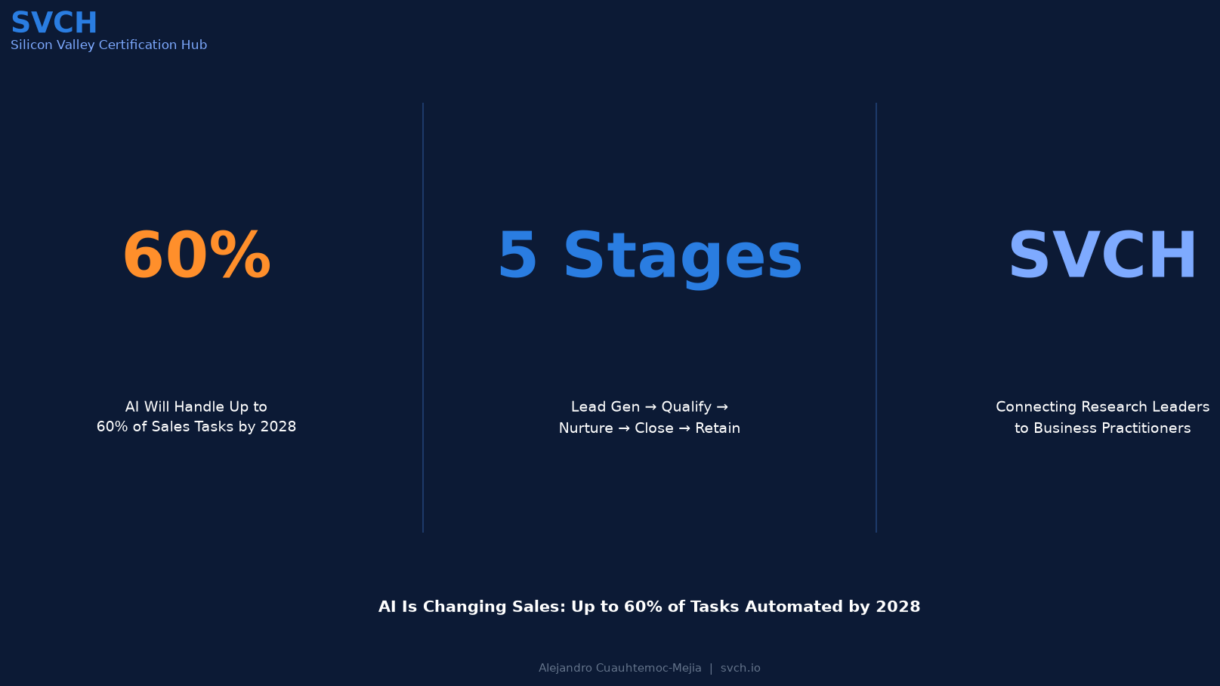
- AI is already everywhere in sales. It helps identify potential clients, write personalized emails, and analyze which leads are most likely to convert. Some experts predict that AI will handle up to 60% of sales tasks by 2028.
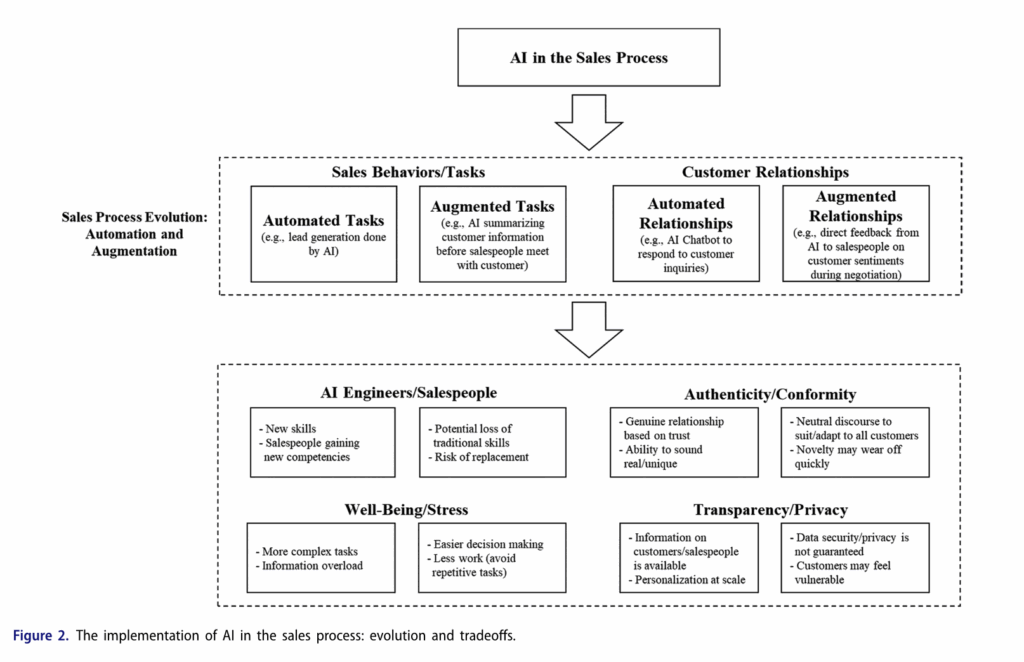
- Salespeople benefit… but they also worry. Many said AI helps them save time and focus on relationship building. But others are unsure how much to trust the data or feel anxious about being replaced by automation.
- Sales managers need new skills. Instead of only tracking quotas, managers have to interpret AI dashboards, guide team adoption, and ensure tools are being used right and ethically.
- Organizations face growing pains. Integrating AI takes more than buying software. It requires clean data, cultural change, and trust between teams.
- Customers notice the difference. AI can make messages more personal, but if overused, it can also make interactions feel robotic. The human touch still matters.
What the Authors Say
“AI tools have seen widespread adoption in sales, but researchers are often several steps behind the business world,” write McClure and her co-authors.
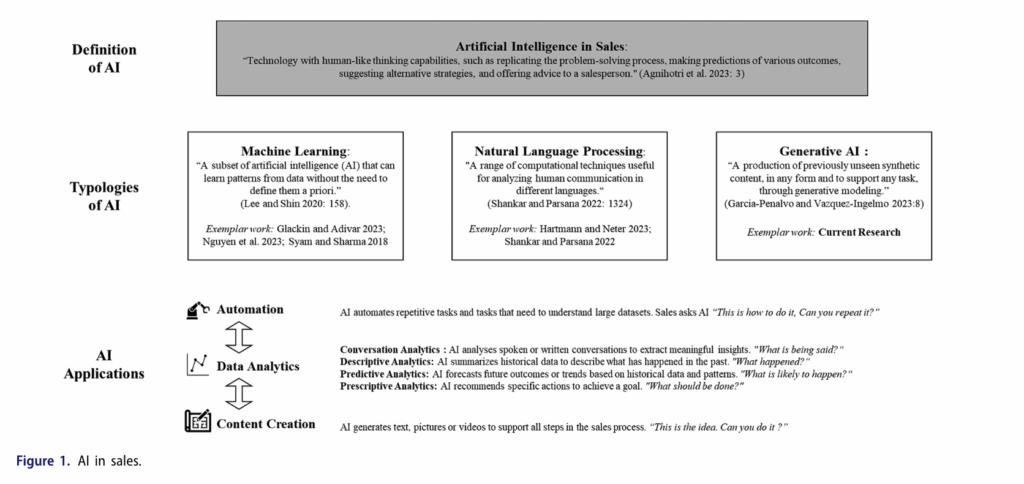
They suggest thinking about AI not as one single thing, but in levels:
- Mechanical AI: like automation tools that schedule meetings
- Thinking AI: systems that analyze customer data to suggest next steps
This classification helps clarify what kind of “AI” a company is actually using. Not every tool labeled “AI” is intelligent in the same way.
What Comes Next
The paper offers a roadmap for both researchers and practitioners. The authors highlight big questions that still need answers:
- How much should salespeople really understand about how AI makes its predictions?
- What happens to trust and motivation when algorithms guide sales decisions?
- How will customers respond when they realize a virtual assistant or chatbot is closing the deal instead of a human?
They also stress that successful adoption will depend on education and transparency: companies must teach teams what the technology can do, and what it can’t.
Why It Matters for Sales Leaders
For anyone leading sales or marketing teams, this research is a reminder that AI is not just another tool. It’s changing how selling itself works.vThe best results will come from helping teams work with AI systems that make smarter decisions, faster.
The researchers argue that this transformation is both a challenge and an opportunity: it can improve productivity and customer understanding, but it also forces leaders to rethink how they train, measure, and motivate teams.
Join the Conversation!!
We’ll discuss these insights live with the authors at our upcoming webinar on Wednesday, October 29th at 10:00 AM Pacific Time.
If you work in sales, marketing, or customer strategy, this is a unique opportunity to understand how AI is transforming the field directly from the people researching it.
🔗 Register now: https://www.linkedin.com/events/artificialintelligenceinsales-w7386070054917996546/theater/
🎓 Hosted by Silicon Valley Certification Hub (SVCH)
Frequently Asked Questions
What does this mean for a Chief AI Officer?
This research provides the strategic framework your sales organization needs to move beyond scattered AI pilots toward intentional implementation. As a CAO, you now have peer-reviewed guidance on how AI reshapes salespeople’s roles, management practices, and organizational strategy—giving you the foundation to build a cohesive AI roadmap rather than reactive tool adoption.
How should we think about AI’s impact on sales manager effectiveness?
The paper reveals that AI doesn’t replace sales managers but fundamentally changes what they do—shifting from micromanagement toward strategic coaching and data interpretation. Your sales leaders need new skills to evaluate AI recommendations, maintain team morale during automation, and make decisions that the algorithm cannot.
How does an AI Assessment for companies help us benchmark against this research?
Silicon Valley Certification Hub’s AI Assessment tools align directly with the three-level framework this paper establishes—helping you measure current AI maturity at the salesperson, manager, and organizational levels. This assessment reveals specific gaps between where you are today and where leading research says you should invest next.
What’s the first step we should take after understanding these findings?
Attend the October 29th webinar to hear directly from the researchers, then conduct an honest audit of where AI is already operating in your sales function versus where it should be. This will clarify whether your current AI adoption is strategic or reactive, and where leadership alignment is needed before scaling.
Want to know how this applies to your company?
At Silicon Valley Certification Hub, we help you align AI + Strategy. Our team works directly with your directors and teams to assess AI readiness, identify gaps, and build a clear path forward — tailored to your business context.
Book a time with our CEO, Alejandro Cuauhtemoc-Mejia:
https://calendar.app.google/2ihQf2JH3D9uJBe68
Silicon Valley Certification Hub
3000 El Camino Real, Building 4, Palo Alto, CA


0 Comments