

Authors: Johannes Habel (University of Houston), Nathaniel N. Hartmann (University of South Florida), Phillip Wiseman (Texas Tech University), Michael J. Ahearne (University of Houston), and Shashank Vaid (McMaster University).
Published in: Journal of Marketing, Vol. 89, 2025
📍Research
Many B2B companies now rely on Automated Lead Nurturing (ALN) systems. Tools that track potential buyers’ online behavior and deliver tailored content to move them closer to purchase. Vendors often claim these tools directly increase conversion rates, but until now, little rigorous evidence existed to prove how and why they work.
This paper answers two big questions:
- Does ALN actually improve lead conversion?
- If so, under what conditions is it most effective?
- How does it create that effect?
What the Research Found
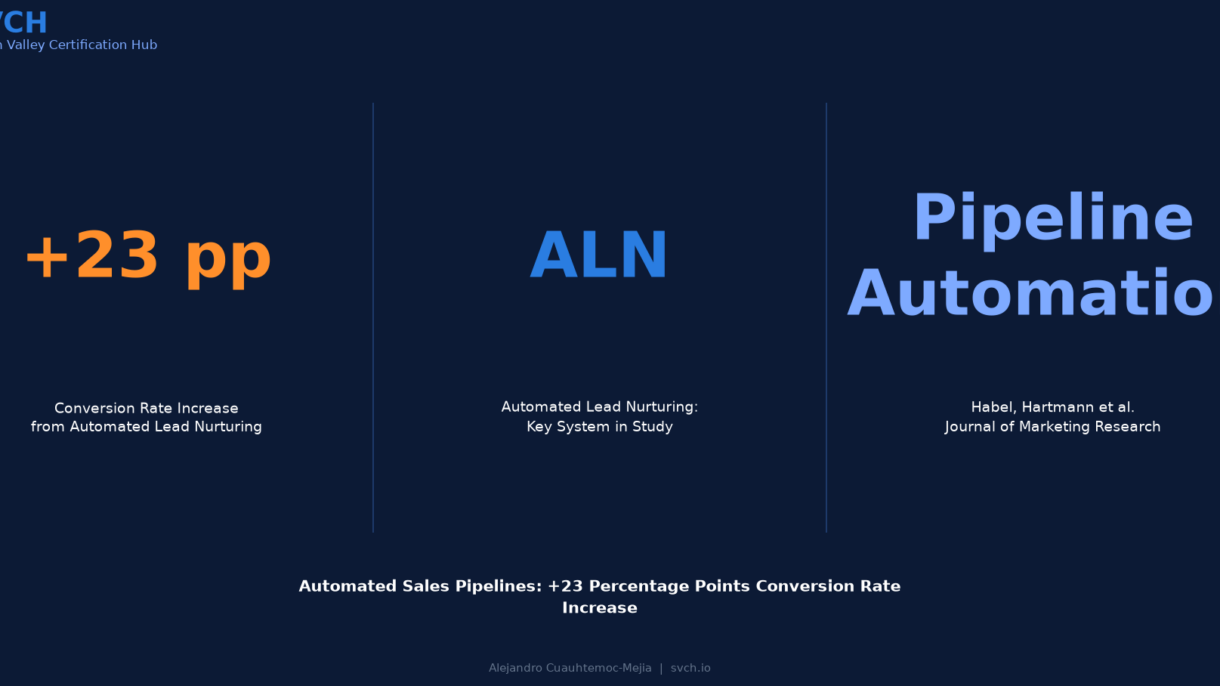
Across one qualitative and three quantitative studies (including randomized field experiments and quasi-experiments), the researchers found that ALN can increase conversion rates by up to 23 percentage points, the effect is highly context-dependent. Sometimes, ALN has no measurable impact at all.
The technology is most effective when:
- Sales cycles are shorter, leaving less time for manual relationship building.
- Leads are new, where there is little existing information.
- Expected sales volume is moderate, meaning buyers don’t seek exhaustive information elsewhere.
Its power is not in closing deals directly but in enhancing the quality of salesperson–lead interactions by reducing information asymmetry helping both parties learn more about each other before the first call.
Theorized Effects of Automated Lead Nurturing
This figure shows the conceptual model the researchers built, starting from qualitative interviews and then tested empirically. It outlines how ALN creates value step by step:
- Automated Lead Nurturing (ALN): The system tracks lead behavior and delivers personalized content.
- Seller–Lead Information Exchange: Through this process, both seller and buyer gain valuable information — the seller learns about buyer needs and intent, and the buyer learns about the seller’s capabilities and solutions.
- Salesperson–Lead Interaction Quality: Because both sides are more informed, their conversations become richer, more relevant, and more relational.
- Lead Conversion: Better conversations increase the chance of conversion.
✅ Key message: ALN doesn’t magically close deals — it enhances the pathway that leads to conversion by making every interaction smarter and more targeted.
Sources of Heterogeneity: Why ALN Works Better in Some Cases

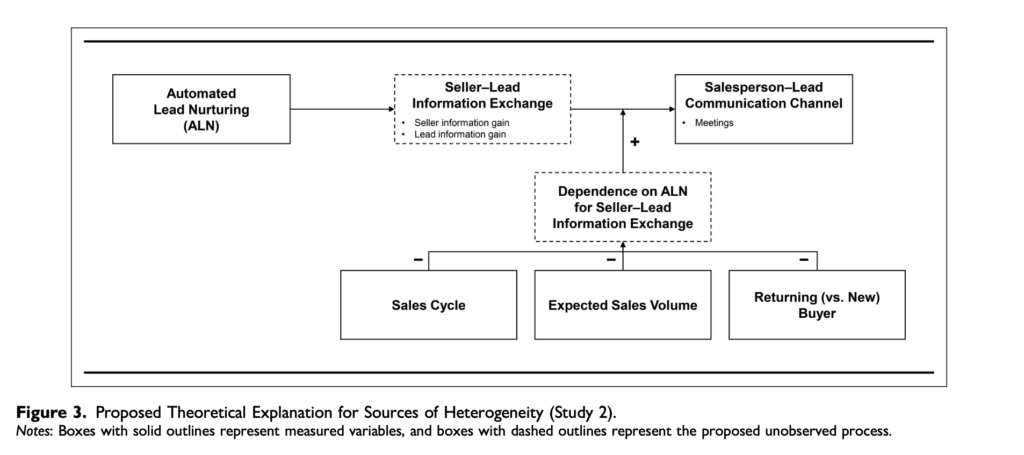
Figure 3 builds on the previous model and explains why the impact of ALN varies so widely.
The core idea is dependence on ALN for information exchange. ALN’s value depends on how much the seller and buyer need the system to learn about each other. That dependence is influenced by three key contextual factors:
- Sales Cycle: The longer the sales cycle, the more opportunities exist for manual interaction — so ALN’s marginal value decreases.
- Expected Sales Volume: For very large deals, buyers often gather information from multiple sources, again reducing dependence on ALN.
- Returning vs. New Buyer: Returning buyers already know the company and its offering, so they rely less on automated nurturing. New buyers, on the other hand, benefit much more.
✅ Key message: ALN works best when information asymmetry is high and there’s little chance for manual exchange — for example, with new leads, smaller deals, and shorter sales cycles.
💡 Strategic Implications
The findings lead to actionable recommendations for B2B sales and marketing leaders:
- Use ALN strategically, not universally. Focus on leads with high information gaps — new prospects, fast-moving opportunities, and medium-sized deals.
- Measure success by interaction quality, not just conversion. ALN’s main contribution is richer, better-informed conversations that lead to conversion indirectly.
- Complement, don’t replace, human selling. ALN should be seen as a support system for sales teams, not a standalone solution.
Final Thoughts
This paper represents one of the most rigorous analyses of automated lead nurturing to date. It reframes the conversation around marketing automation by showing that technology’s value is not in replacing human effort, but in amplifying it.
When information asymmetry is high and human bandwidth is limited, ALN can dramatically improve the sales process. But in contexts where information already flows freely — long enterprise sales, large deals, or repeat buyers — its impact is far more limited.
Frequently Asked Questions
What does this mean for a Chief AI Officer?
This research validates that AI-driven lead nurturing delivers measurable ROI—up to 23 percentage points in conversion lift—but only when deployed strategically against the right use cases. Your AI investments should be evaluated not on general capability, but on fit with your sales cycle length, lead maturity, and expected volume, ensuring you’re not automating processes where human judgment remains superior.
Under what conditions should we prioritize automated lead nurturing over traditional sales methods?
ALN delivers the strongest returns in shorter sales cycles where manual follow-up timing is critical, with early-stage leads where personalization at scale matters most, and in moderate-volume scenarios where buyers won’t independently seek competing information. If your sales cycle spans months or your leads are already well-informed, the incremental benefit of automation diminishes significantly.
How should we evaluate whether our ALN implementation is actually working?
Rather than assuming vendor claims about conversion improvements, conduct an AI Assessment for companies like the frameworks Silicon Valley Certification Hub recommends—measuring baseline conversion rates, isolating ALN’s impact through controlled testing, and analyzing how automation affects the quality of your sales team’s interactions with leads. This research underscores that context determines effectiveness, so a one-size-fits-all rollout will likely disappoint.
What should we do next with this research?
Map your current sales pipeline against the three conditions where ALN excels: sales cycle length, lead profile maturity, and expected volume—then pilot automation in the segments most likely to benefit before full enterprise deployment. Additionally, redirect your focus from expecting ALN to close deals directly toward measuring whether it’s enabling your sales team to have higher-quality conversations with prospects.
Want to know how this applies to your company?
At Silicon Valley Certification Hub, we help you align AI + Strategy. Our team works directly with your directors and teams to assess AI readiness, identify gaps, and build a clear path forward — tailored to your business context.
Book a time with our CEO, Alejandro Cuauhtemoc-Mejia:
https://calendar.app.google/2ihQf2JH3D9uJBe68
Silicon Valley Certification Hub
3000 El Camino Real, Building 4, Palo Alto, CA


0 Comments