

Better Recommendations Grow the Middle: What 8.5 Million Netflix Users Teach Us
🏢 Netflix
📅 August 2026
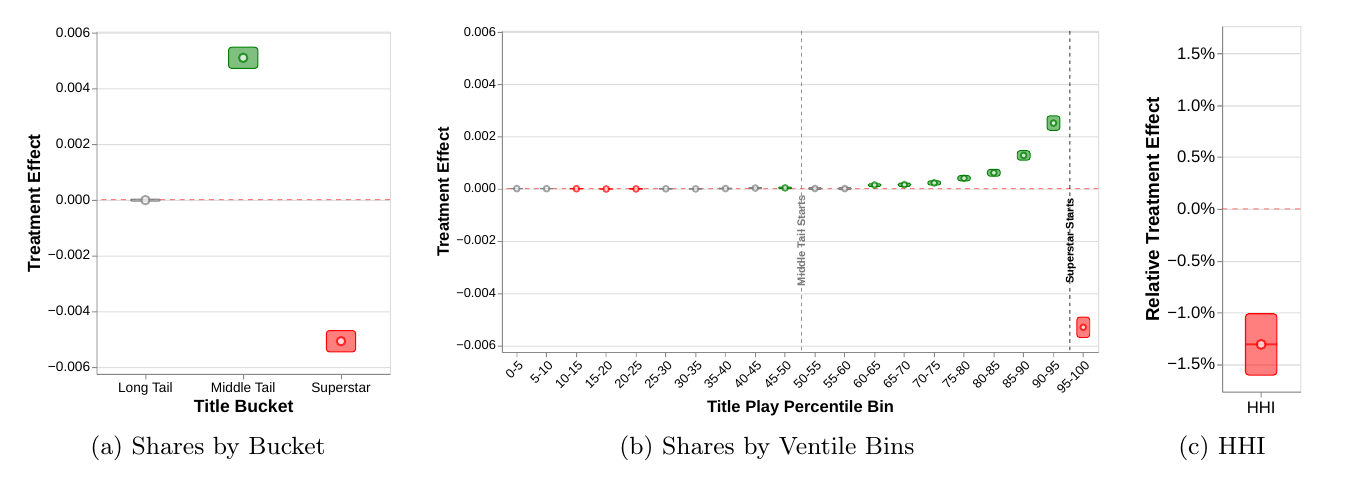
Here is a number that flips a common belief on its head. Netflix ran a 60-day field experiment across 8.5 million subscribers, comparing a frozen recommendation algorithm against one receiving every improvement the company’s engineers had built. The result: better recommendations did not push people toward the blockbusters. They spread viewing toward a broader band of moderately popular titles, the middle of the demand curve. Concentration of consumption, measured by the Herfindahl index, dropped a statistically and economically significant 1.2%.
I did not expect that. Most of us assume smarter AI personalization funnels everyone to the biggest hits and leaves an ever-narrower set of winners. This paper from Netflix, written with researchers from Cornell and Northwestern, says the opposite is true in a well-run system. The old worry that algorithms polarize demand to the extremes is wrong.

Why This Paper Matters
Every company running a marketplace, a subscription business, or any product with a catalog faces the same quiet question: where should we put our next dollar of investment? A common answer is to bet on the few products most likely to be hits, or to chase deep niche segments where there is less competition. This paper suggests both instincts are off.
Turns out, as your recommendation and personalization technology matures, the economics of your portfolio shift. Better algorithms grow the middle. Strong mid-tier products that previously got crowded out, because weaker systems defaulted to showing popular items, suddenly start to perform. The return on investing in solid second-tier content rises, while leaning on a couple of blockbusters gets relatively less attractive.
That reframes an AI Assessment for companies. Alongside asking what a model does, executives should ask where a better model redirects demand. These findings come straight from Netflix’s own field data, so this is not a simulation or a guess. It is how a flagship platform actually behaves.
Methodology, Explained Simply
Picture one subscriber getting the old, frozen recommendation engine and another getting everything new. Now multiply that pair by millions. Netflix split its base of 8.5 million users into two groups for 60 days and simply watched what each group watched.
That design is the whole reason the results are trustworthy. Because the only difference between the groups was which algorithm served recommendations, any difference in viewing has to come from the algorithm itself. No assumptions about taste, no model of viewer behavior, no extrapolation. Clean field evidence.
They then split every title into three buckets. Superstars are the biggest blockbusters. The middle-tail is the broad band of moderately popular titles that usually sit out of the spotlight. The long-tail is the deep niche. The question was simple: when recommendations improve, which bucket wins?
Results and Practical Insights
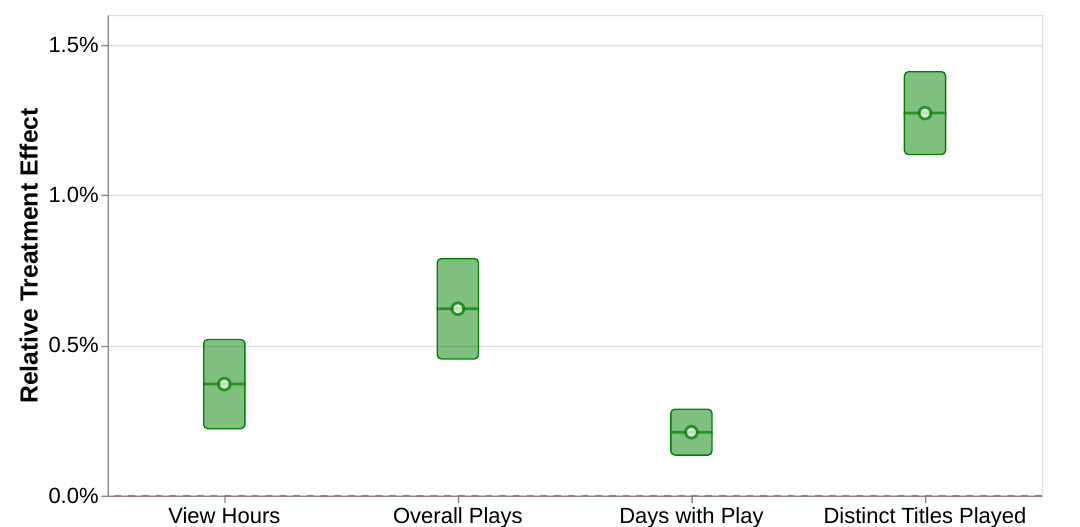
Start with the growth story, because it matters before any nuance. Better recommendations raised engagement across the board. Distinct titles played rose 1.2%. Total plays rose 0.62%. View hours rose 0.37%, and days-with-a-play rose 0.21%. This is not an efficiency play. Personalization is a top-line growth engine.
Then the surprise. The distributional shift did not favor the blockbusters. Play share moved away from superstars and toward the middle-tail, and the deepest niche titles were essentially unchanged. In a good recommendation system, the upside lands in the middle of the demand curve. That is a strategic signal, not a technical footnote.
Silicon Valley Certification Hub reads papers like this for a reason. Most leaders treat recommendation quality as a cost center or a technical detail owned by engineers. The evidence says it sits closer to the top of the growth agenda, and the Chief AI Officer is the natural owner of that measurement. If you are not tracking how well your personalization redirects demand, you are flying blind on one of your larger growth levers.
Where does your catalog or portfolio actually earn when your algorithms get better?
At Silicon Valley Certification Hub, we help revenue and operations leaders evaluate and deploy AI that fits their actual business processes.
Key Takeaways for Executives
Paper Figures
Thanks to All Authors
Want to know how this applies to your company?
At Silicon Valley Certification Hub, we help you align AI + Strategy. Our team works directly with your directors and teams to assess AI readiness, identify gaps, and build a clear path forward — tailored to your business context.
Book a time with our CEO, Alejandro Cuauhtemoc-Mejia:
https://calendar.app.google/2ihQf2JH3D9uJBe68
Silicon Valley Certification Hub
3000 El Camino Real, Building 4, Palo Alto, CA


0 Comments